How much did YOUR healthcare costs increase this year?
For many employers in 2026, the answer is unsettling. Premiums continue to rise year after year, often without a clear explanation or corresponding improvements in care. What was once considered a standard employee benefit has become one of the most unpredictable and burdensome line items in a company’s budget.
And yet, despite rising costs, the experience for employees hasn’t improved. Appointments are still hard to get, visits are rushed, and preventative care is often overlooked. The results is a system where employees are paying more while their teams are getting less.
At some point the question shifts from “How do we manage theses increases?” To something more fundamental.
Is this model still working?

The Breaking Point: Rising Costs, Diminishing Value
Employers across the country are facing the same reality:
- Annual premium increases outpace inflation
- Higher deductibles and out-of-pocket costs for employees
- Growing frustration with access and quality of care
- Little to no transparency to where healthcare dollars are going
The traditional response has been to adjust the plan: raise deductibles, increase employee contributions, or reduce coverage. While these changes may provide some short-term relief, they often create long-term challenges, including delayed care, lower employee satisfaction, and ultimately higher downstream costs.
In other words, cost-shifting is not cost control.
A Different Approach: Rethinking the Model
Forward-thinking employers are beginning to recognize that the issue isn’t just cost. It’s the structure itself.
The traditional insurance-based system is designed around billing and reimbursement, not relationships or outcomes. It rewards volume over quality and often limits the time and attention providers can give to each patient.
Direct Primary Care offers a fundamentally different approach.
Instead of navigating a complex billing system, employers and employees gain direct access to a primary care provider through a simple monthly membership. This model removes many of the barriers that have come to define modern healthcare and replaces them with something far more effective: time, access, and continuity of care.
What Changes When You Shift to Direct Primary Care?
For employers, the impact is both immediate and long-term.

Predictable, transparent costs
A flat monthly fee replaces unpredictable billing and rising premiums for primary care services.
Improved access to care
Employees can typically access same-day or next-day appointments, with longer visit times and direct communication with their provider.
Stronger doctor-patient relationships
With fewer patients per provider, care becomes more personal, thorough, and effective.
A focus on prevention and early intervention
Health concerns are addressed earlier, often before they develop into more serious and costly conditions.
Reduced reliance on urgent care and emergency services
When employees have easy access to their physician, they are less likely to seek care in higher-cost settings.
Over time, these shifts can lead to healthier employees, fewer missed workdays, and a more engaged, supported workforce.
From Employee Benefit to Strategic Advantage
Employers who move toward relationship-based care are seeing benefits that extend beyond cost savings:
- Increased employee satisfaction and retention
- A stronger culture of wellbeing
- Greater trust in the healthcare experience
- A meaningful differentiator in a competitive hiring market
In a time when employees are increasingly aware of the limitations of traditional healthcare, offering a better model can make a lasting impact.
Filling the Gap: Coverage for the Unexpected
One of the most common questions employers have when considering Direct Primary Care is what happens in the case of a major medical event such as an accident, hospitalization, or surgery.
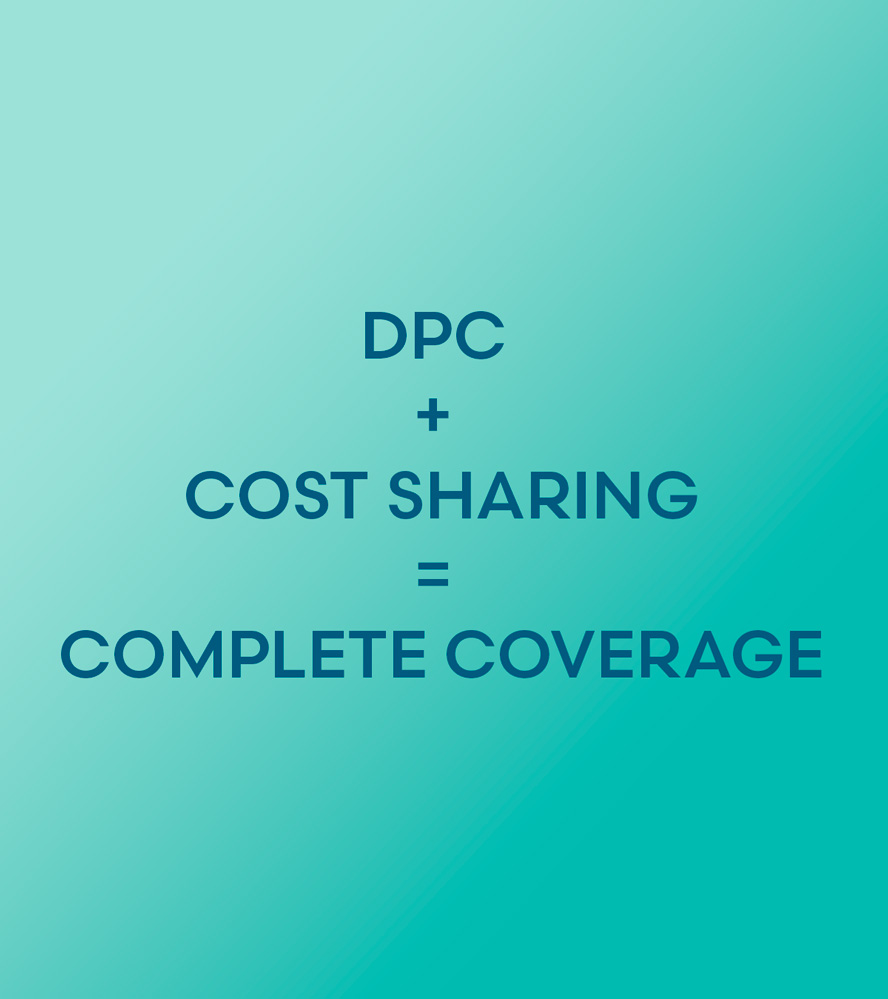
How Medical Cost Sharing can Complete DPC Healthcare CoverageDirect Primary Care is designed to cover the majority of everyday healthcare needs, but it is not intended to replace coverage for large, unpredictable expenses. That’s where high-deductible, wraparound solutions such as medical cost-sharing programs come in.
When paired together, Direct Primary Care and a cost-sharing model create a complete, complementary system:
- DPC covers the day-to-day care, prevention, and early intervention
- Cost-sharing provides protection for larger, less frequent medical events
- This combination often results in lower overall costs, greater transparency, and a more supportive patient experience compared to traditional insurance plans.
For many employers, it offers a practical path forward: comprehensive coverage without the complexity and unpredictability of conventional insurance.
A Smarter Way Forward
The healthcare landscape is changing. Rising costs are forcing difficult conversations, but they are also opening the door to new possibilities.
Direct Primary Care is not a replacement for every aspect of healthcare. But as a foundation for accessible, high-quality primary care, it offers a compelling alternative to the status quo.
For employers willing to rethink their approach, it represents an opportunity to move from reactive spending to proactive investment in the health of their teams.
Let’s Start the Conversation
If you’re evaluating your healthcare strategy for 2026 and beyond, now is the time to explore what a different model could look like.
Whether you’re looking to reduce costs, improve access, or offer a more meaningful benefit to your employees, we’re here to help.
Let’s connect and explore what’s possible.