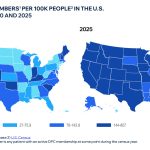
Employers Are Now Funding More Than Half of All Direct Primary Care Memberships. What has changed?

For years, Direct Primary Care was primarily a patient-driven movement.
Someone would hear about a local DPC practice, liked the way they approached primary care, and decide to become a member. Physicians who were frustrated with the traditional healthcare system opened independent practices built around smaller patient panels, longer visits, direct communication, and a monthly membership model.
But that is now changing.
For the first time, employers are funding the majority of Direct Primary Care memberships.
According to Hint Health’s 2026 Direct Primary Care Trends Report, 60% of active DPC memberships are now employer-funded, compared with 21% in 2017. The report draws on data from more than 2,700 DPC clinicians and 1.4 million members. DPC membership has grown 837% since 2017, with a DPC network presence in 49 states.
That signals a clear shift in who is recognizing the value of Direct Primary Care and, perhaps more importantly, what employers are looking for from healthcare benefits.
Why Are Employers Now Paying Attention to DPC?
Healthcare costs continue to be a major concern. Employees face high deductibles and co-pays. Access to primary care has become frustrating, with long waits and limited time with a physician. And despite the amount employers spend on healthcare benefits, employees don’t always feel like they’re getting meaningful value from those benefits.
The Direct Primary Care approach is different.
Instead of paying for individual primary-care visits through insurance, DPC uses a predictable membership model. Patients have an ongoing relationship with their primary-care provider with easier access to care, longer appointments, and direct communication with their care team.
For employers, that means a healthcare benefit that is simpler to understand and easier for employees to actually use. At Vital Edge Health, we see this as one of the reasons DPC resonates so strongly with employers: it improves the one part of healthcare employees use most often.
Healthcare begins with Primary Care.
Think about the healthcare an employee is most likely to need during an ordinary year: A physical, a preventative screening, a sick day, a medical question for something that doesn’t feel quite right, or help managing a chronic condition. These are not dramatic events, but that’s what make up most of healthcare.
When access to primary care is difficult or expensive, people may delay care, skip preventive visits, or wait until a problem becomes more serious. This affects how they feel, function, and show up in their everyday lives.
DPC is designed to make that first layer of care easier to access.
At a typical Vital Edge Health DPC practice, members have access to preventive and primary care, same- or next-day appointments, longer visits, direct communication with their care team, and no co-pays for covered visits.
Instead of asking, “Is this important enough to justify another healthcare expense?” an employee can have an ongoing relationship with a primary-care provider and reach out when help is needed. Feeling physically cared for also has a positive impact on a patient’s mental and emotional well-being.
Direct Primary Care’s Role on Prevention
Primary care accounts for less than 10% of total healthcare spending, yet it has a big influence on the remaining 90%.
A primary-care physician who identifies problems early, ultimately helps patients avoid emergency-room visits or other kinds of more intensive care. DPC is built on this kind of healthcare.
In other words, with DPC’s focus on prevention, more expensive care needs are simply avoided.
When people have an ongoing relationship with a physician and can reach that physician when they need medical help, there are more opportunities to catch problems early and address them before they become more serious and more expensive.
Research on employer-sponsored comprehensive primary care found 45% lower total healthcare spending among people who used the model for most of their primary care, along with 33% lower emergency-department spending and 16% lower hospital spending. The study wasn’t specifically about DPC, but it illustrates why greater access to comprehensive primary care can have an impact far beyond the primary-care visit itself.
Employers Are Beginning to Think Differently About Healthcare Benefits
The growth in employer-sponsored DPC suggests that employers are moving away from asking:
“How can we spend less on healthcare?”
And moving towards:
“How can we provide better healthcare in a way that makes financial sense?”
Those are two very different approaches.
A lower-cost benefit isn’t necessarily better if employees can’t access it or don’t use it. Likewise, a benefit that employees love may not be sustainable for the business if costs are unpredictable or too high.
DPC makes primary care accessible as well as financially predictable.
Because DPC is not insurance, it can be paired with other approaches for healthcare expenses that fall outside of primary care. DPC works great alongside an HDHP, major-medical coverage, or an appropriate medical cost-sharing arrangement.
That opens up an interesting possibility:
Maybe Healthcare Doesn’t Have to Be One Thing!
One of the biggest assumptions in traditional healthcare is that a single insurance plan needs to be responsible for everything. But healthcare needs aren’t all the same.
- A routine primary-care visit is very different from a hospitalization.
- Preventive care is different from a major surgery.
- A conversation with your doctor is different from an unexpected medical event.
So why does every part of the healthcare experience have to be built around the same model?
DPC offers one piece of the answer by taking primary care out of the traditional insurance structure and putting the focus back on the relationship between patient and physician.
Other solutions can address larger and less frequent medical expenses.
The opportunity is to put those pieces together intentionally.
The Bigger Shift
The most interesting thing about the 60% statistic is not simply that DPC is growing, but rather It’s who is driving that growth. When employers become the majority funders of a healthcare model that was originally built largely around individual patients and independent physicians, it tells us that employers are willing to rethink the traditional healthcare model when they see a way to provide meaningful care, improve access, and create more predictable costs.
And that conversation is only beginning.
At Vital Edge Health, we believe employers shouldn’t have to choose between healthcare their employees value and a healthcare strategy that makes financial sense. Rather start with better primary care, then build from there.